

In this article
Like Eat App, we handle table reservations, guest management, no-show prevention, and automated communications – all without per-cover fees. Where we differ is in our approach to pricing and add-ons. With Eat App, essential features often come at extra cost: POS integration is $89/month, phone integration $25/month, online waitlist $19/month, and prepayments another $19/month. Google and TripAdvisor bookings add $2 per cover on top. Resos is designed to be affordable from the start, with optional add-ons ranging from €7.99 to €19.99/month.
What makes Resos different
Both platforms help you manage reservations without per-cover commission fees, but Resos emphasises transparent pricing over à la carte feature stacking. When you compare base plans, Eat App’s Basic is $129/month for unlimited covers, while Resos Unlimited is €125/month for unlimited bookings and Resos Basic is €45/month for 350. Getting comparable functionality from Eat App often requires adding several paid extras.
We also believe in straightforward setup. While Eat App offers extensive CRM depth and enterprise features, that complexity isn’t necessary for every restaurant. Resos gets you running quickly with an interface staff can learn in minutes, not days. No lengthy onboarding sessions required.
Our approach to customer service follows the same philosophy. Every restaurant gets access to fast, free, and friendly support–whether you’re on the free plan or unlimited. Eat App’s support operates primarily from Europe and Middle East time zones, which can mean delayed responses for restaurants in other regions.
“I wanted something that is affordable and has all the features I need without any hidden fees. Resos had everything I was looking for.” – Ian Miller, The Dollhouse Tearoom
How Resos and EatApp compare
| Feature | Resos | EatApp |
|---|---|---|
| Pricing model | Flat monthly subscription | Per-feature add-on pricing |
| Per-cover fees | None | Charged per seated guest on third-party bookings |
| Add-on structure | Optional, low-cost add-ons | Many core features priced separately |
| Setup complexity | Quick to set up, staff learn in minutes | Deep feature set with a steeper learning curve |
| Customer support | Fast, free support on all plans, any time zone | Operates primarily from Europe and Middle East time zones |
| Hotel PMS integration | Not available | Available, suits hotel F&B operations |
Where Eat App shines
Let’s be fair: Eat App offers capabilities we don’t. Their CRM goes deep–tracking guest spending, preferences, and visit history across multiple venues with detailed tagging and segmentation. For hotel restaurants needing PMS integration to track hotel guest dining, Eat App’s partnerships with major hospitality groups make it a natural fit.
Eat App also works across every device type–iPhone, Android, web browsers, and iPad–giving flexibility that some platforms don’t offer. Their direct integrations with Google and TripAdvisor can drive discovery, though those bookings come with per-cover fees.
For multi-venue restaurant groups or hotel F&B operations that need enterprise-grade guest profiles, marketing automation, and cross-property databases, Eat App’s comprehensive feature set may justify the higher total cost.
When Resos might be the better fit
Resos tends to work well for restaurants that:
- Want predictable monthly costs
- Prefer a system that’s quick to learn and easy for staff to use
- Don’t need hotel PMS integration or enterprise CRM depth
- Need a free plan to test properly (Resos offers 25 bookings/month free)
- Want affordable add-ons (€7.99–€19.99/month vs. $19–$89/month)
- Value support during their local business hours
Switching is easier than you think
Worried about losing your booking history and guest data? We’ve built an import tool that makes migrating from Eat App (or any other system) straightforward. You can bring over your existing reservations and guest information so you’re not starting from scratch. Your regulars stay in the system, their preferences intact, and your team keeps the context they need to deliver great service.
Most restaurants complete their migration in a single session. If you run into any questions, our support team is happy to walk you through the process–no extra charge, no premium support tier required.
Try both and see what fits
The best way to decide between any reservation systems is to try them yourself. Eat App offers a 14-day free trial, and Resos has a free plan with 25 bookings per month–no time limit, no credit card required. Run them alongside your current setup and see which workflow feels more natural for your team.
Many restaurants find that Resos’s simplicity helps staff get up to speed faster. When someone needs to check a booking or manage the waitlist, they can do it without extensive training. The interface guides them through the process naturally.
Frequently asked questions about switching from Eat App
How does Resos compare to Eat App for managing reservations?
Both platforms handle reservations without per-cover commission fees on direct bookings. The main differences are pricing structure and feature depth. Eat App offers extensive CRM and enterprise tools but charges separately for many features ($89/month for POS integration, $19/month for waitlist, etc.). Resos focuses on simplicity with more affordable base pricing and add-ons. Both include table management, automated reminders, and guest communication tools.
Can I use Resos alongside Eat App?
Yes. Many restaurants run multiple systems during a transition period or to compare workflows. Since Resos has a free plan, there’s no risk in testing it alongside your current setup.
Can I import my bookings and guest data from Eat App?
Yes. Our import tool lets you bring over your existing reservations and guest information from Eat App or other systems. You won’t lose your booking history or have to rebuild your guest database from scratch.
What features does Resos include?
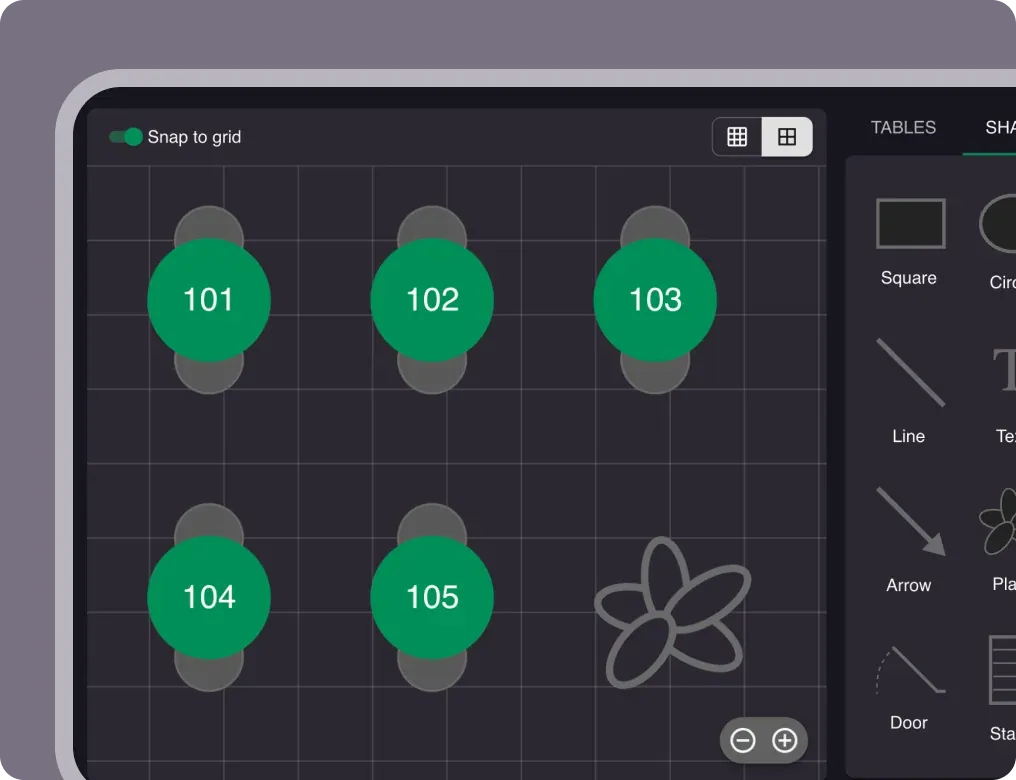
Resos provides table management, visual floor plans, online bookings, waitlist management, no-show tracking, prepayment options, automated SMS and email reminders, guest profiles, Google Reserve integration, and multilingual support. Some advanced features are available as optional add-ons.
How does pricing compare?
Eat App’s Basic plan is $129/month for unlimited covers, with add-ons for POS ($89/month), phone integration ($25/month), waitlist ($19/month), and prepayments ($19/month). Resos offers a free plan (25 bookings/month), Basic from €45/month (350 bookings), Plus from €85/month (750 bookings), and Unlimited from €125/month. Optional add-ons range from €7.99 to €19.99/month.
Is Resos difficult to set up?
Most restaurants are up and running within an hour. You can add your floor plan, set your booking rules, and embed the booking widget on your website the same day. No sales calls, lengthy contracts, or complex onboarding required.
What about customer support?
We offer fast, free support to all restaurants regardless of plan. Our team takes the time to understand your specific needs rather than pointing you to documentation. Unlike Eat App’s support which operates from Europe/Middle East time zones, we aim to respond quickly regardless of where you’re located.
Does Resos have Google and TripAdvisor integration like Eat App?
Resos integrates with Reserve with Google, allowing guests to book directly from Google Search and Google Maps. This is available as an add-on at €7.99/month–compared to Eat App’s $2 per cover fee that can add up quickly with volume. We also integrate with Facebook and Instagram for social bookings.
Does Resos work for hotel restaurants?
Resos works well for independent restaurants and small groups. For complex hotel F&B operations requiring PMS integration and cross-property guest databases, Eat App’s enterprise features may be more suitable.
How do I get started?
Sign up at resos.com and set up your first tables. The process takes a few minutes, no credit card required for the free plan. You’re already here–why not give it a try?