


In this article
SMS marketing for restaurants is the practice of sending guests short, permission-based text messages: booking confirmations, reminders, and the occasional offer or update. It works because texts get read.
For a restaurant, that immediacy is the whole point. A reminder the night before service reaches the guest in time to confirm or cancel. A “we have a table free tonight” text lands while there is still time to fill it. Email rarely moves that fast.
This guide covers how to run SMS marketing for your restaurant without wasting money or irritating guests:
- How to build an opt-in SMS list the right way
- What to send, from confirmations to promotions
- The rules you have to follow (consent, opt-out, quiet hours)
- Where SMS beats email, and where it does not
Key takeaways
- The highest-return restaurant SMS is transactional: booking confirmations and reminders that cut no-shows. Resos automates these for you.
- You must have clear opt-in consent before texting guests, and every message needs an easy way to opt out.
- Keep texts short, identify your restaurant, send sparingly, and respect quiet hours.
- Use SMS for anything urgent or time-bound. Use email for longer, less urgent stories.
Why SMS marketing works for restaurants
SMS works for three reasons: reach, speed, and intent.
Almost everyone has a phone in their pocket, and almost every text gets opened. You are not fighting a crowded inbox or a social media algorithm. When a guest hands over their number, they are giving you a direct line.
Speed matters in hospitality more than in most industries. Bookings, cancellations, and empty tables all happen on the day. A channel that reaches guests in minutes is worth more to a restaurant than one that reaches them tomorrow.
And because guests have to opt in, the people on your list already know you. That intent makes SMS one of the highest-converting channels a restaurant has, as long as you do not abuse it.
Building your SMS list
Start with consent. You cannot legally or ethically text guests who have not agreed to receive messages. The good news is that a restaurant collects phone numbers naturally, so building a list is mostly about asking permission at the right moments.
Through online bookings
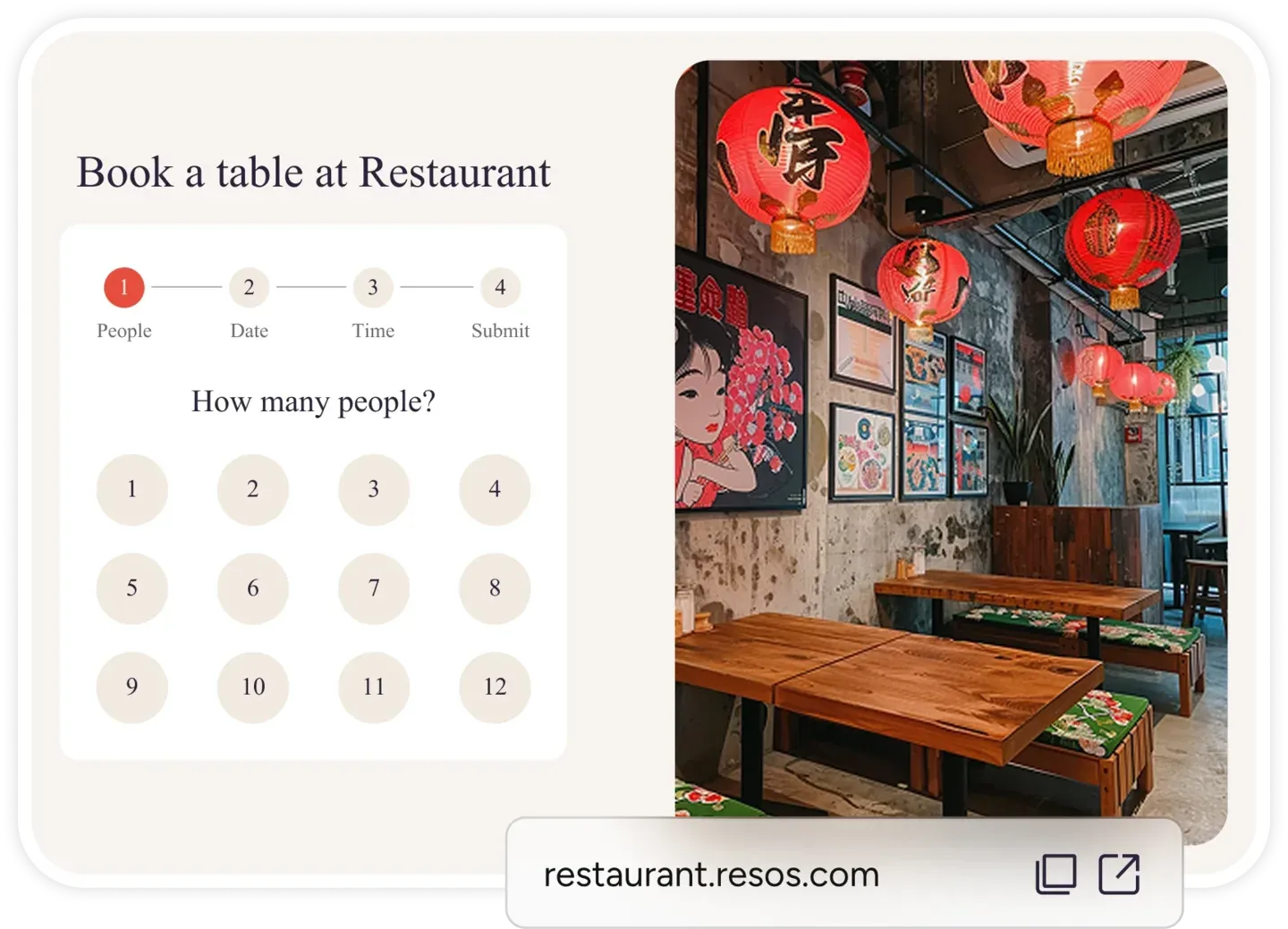
If you take reservations online, you already capture guest phone numbers. Add a clear, optional checkbox at booking that lets guests agree to receive offers and updates by text. Keep the booking confirmation itself separate, since that is a transactional message rather than marketing.
In the restaurant
Train staff to mention it naturally: “Want a text when we release our holiday menu?” A small sign at the host stand or on the table with a short keyword works too (“Text JOIN to our number for a free coffee on your next visit”).
On your website and social channels
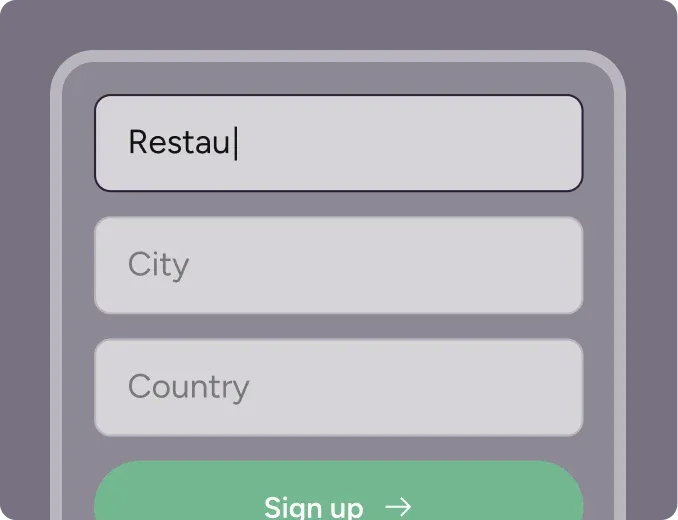
Add a sign-up option to your site and link to it from your social media profiles. A small incentive, like a welcome discount or a free side, lifts sign-ups without costing much.
Whatever the channel, tell guests two things up front: what you will send, and roughly how often. Setting that expectation is the single best way to keep people subscribed.
What to send
Restaurant SMS falls into two buckets: transactional messages tied to a booking, and promotional messages that market your restaurant. The transactional ones deliver the most reliable return, so start there.
Booking confirmations and reminders
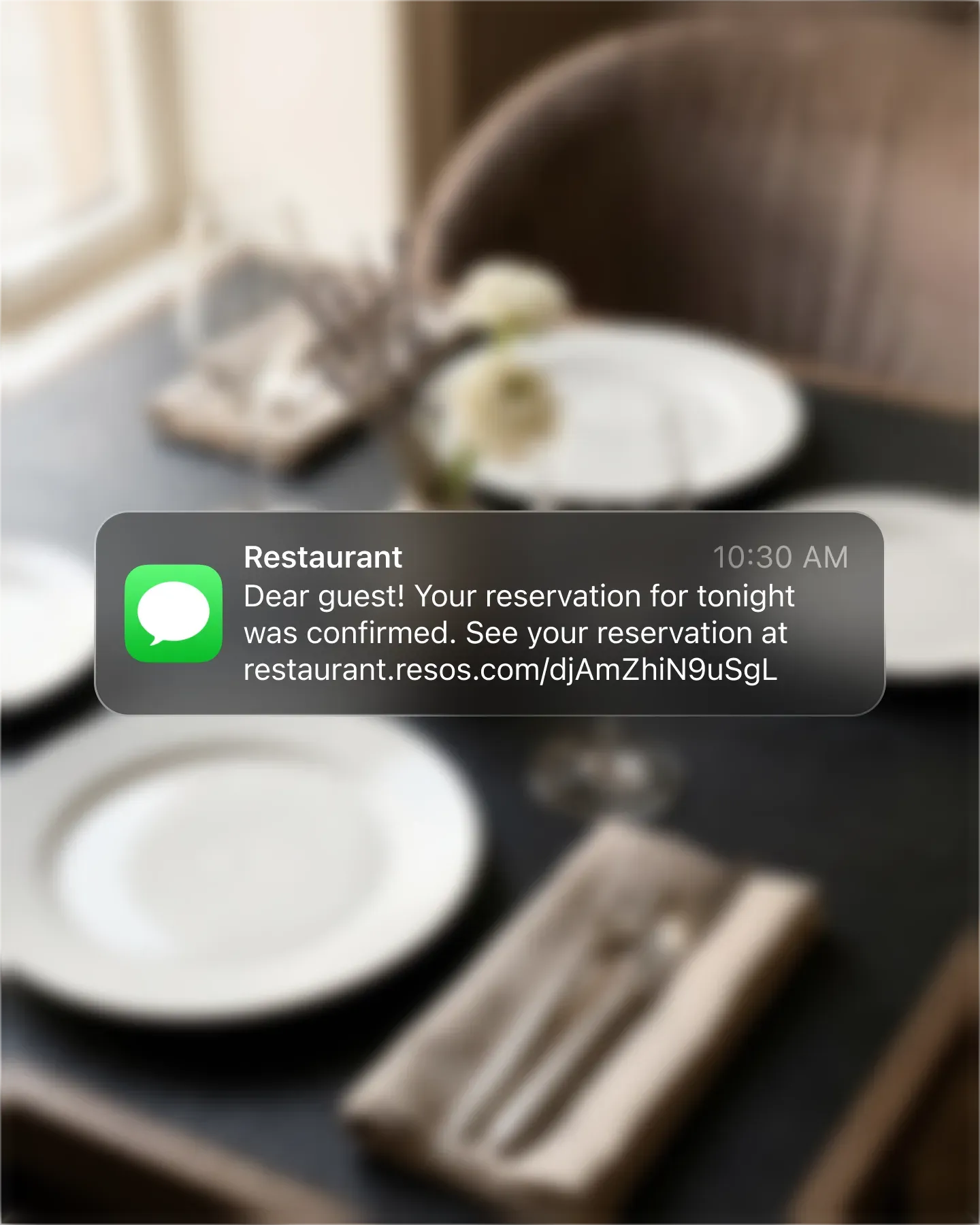
This is the workhorse of restaurant SMS. A confirmation reassures the guest, and a reminder before the booking gives them a chance to confirm or cancel in time. That single message is the most effective no-show tool most restaurants have. Resos sends automated SMS and email notifications for exactly this, so reminders go out without anyone lifting a finger.
Last-minute availability
Had a cancellation for Friday at 7? A short text to a small, relevant group can fill the table faster than any other channel, because it reaches people instantly.
Feedback requests
A polite text after the visit asking how everything was helps you catch problems privately and points happy guests toward a public review. Resos can collect guest feedback automatically once the booking is complete.
Promotions and events
Quiet Tuesday, a new seasonal menu, or a one-off event are all worth a short, occasional text to guests who opted in for offers. Keep these rare. The fastest way to lose your list is to treat it like a daily flyer.
SMS best practices
The rules of good restaurant SMS are simple, and breaking them is expensive because people unsubscribe fast.
- Keep it short. One clear message, one clear action. A text is not a newsletter.
- Say who you are. Open with your restaurant name. An unknown number reads as spam.
- Include a clear next step. A booking link, a reply keyword, or a date and time. Make it obvious what to do.
- Send sparingly. For most restaurants, a few promotional texts a month is plenty. Reminders and confirmations are different, since guests expect those.
- Mind the timing. Avoid early mornings and late nights. Aim for sensible hours, and send promotions when guests are likely to act, such as late afternoon before an evening out.
- Personalize where you can. A guest’s name and their usual booking time make a text feel like a message, not a broadcast.
Staying compliant
SMS marketing is regulated, and the rules are stricter than for email. The details vary by country, so check your local law, but the principles are consistent everywhere.
- Get explicit opt-in consent before sending marketing texts. A pre-ticked box does not count in most places.
- Make opting out easy, usually with a “reply STOP” instruction, and honor it immediately.
- Identify your business in the message.
- Respect quiet hours and any frequency limits your region sets.
In the United States this falls under the TCPA, and in the EU and UK under GDPR and the ePrivacy rules. When in doubt, get consent and keep records of it. Transactional messages like booking reminders are treated differently from marketing, but the safe habit is to always have permission.
SMS vs email for restaurants
SMS and email are not rivals. They do different jobs, and the best restaurants use both.
Use SMS when the message is short, urgent, or time-bound: confirmations, reminders, last-minute availability, same-day offers. Use email when you have more to say and less urgency: a monthly newsletter, a story about a new chef, a detailed event invite with photos.
SMS costs more per message than email, so reserve it for moments where speed and a near-certain open are worth paying for. A reminder that prevents one no-show usually pays for itself many times over.
Measuring results
Track a few simple numbers so you know what is working:
- Delivery rate, to confirm your list is clean and numbers are valid.
- Response or redemption, such as bookings made from an availability text or offers claimed.
- No-show rate, before and after you turn on reminders. This is where transactional SMS proves its value most clearly.
- Opt-out rate. A rising opt-out rate is a warning that you are sending too much or too little of value.
Start with reminders, measure the drop in no-shows, then expand into occasional promotions once you trust the channel.
Frequently asked questions
Is SMS marketing effective for restaurants?
Yes. The strongest use for restaurants is booking reminders.
Do I need permission to text my guests?
Yes. You need clear opt-in consent before sending marketing texts, and every message needs an easy way to opt out, such as “reply STOP”. Rules like the TCPA in the US and GDPR in the EU and UK require this. Booking confirmations and reminders are treated as transactional, but the safe habit is to always have permission.
How often should a restaurant send marketing texts?
Sparingly. For most restaurants, a few promotional texts a month is plenty. Transactional messages like confirmations and reminders are different, since guests expect those and welcome them. Over-texting is the fastest way to lose subscribers.
Does Resos send marketing SMS campaigns?
Resos automates transactional SMS: booking confirmations, reminders, and feedback requests. These are the highest-return texts a restaurant sends. Resos does not send bulk promotional campaigns, so for broad marketing blasts you would build an opt-in list and use a dedicated SMS tool, while Resos handles the reminders that protect your covers.
How much does restaurant SMS cost?
SMS is priced per message and varies by country. Email reminders in Resos are free, and SMS is available as a paid option. You can see current per-message rates by country on the SMS prices page.
Conclusion
SMS marketing gives restaurants something no other channel does: a near-guarantee that your message gets read, within minutes. Start with the basics that pay for themselves, automated booking confirmations and reminders, then grow into occasional, opt-in promotions once you have a list that trusts you. Keep texts short, get consent, and send only when you have something worth a guest’s attention.
Related: Restaurant marketing strategies, ideas, and trends | Email marketing for restaurants | Social media marketing for restaurants