



In this article
- Key takeaways
- The cancellation problem hiding behind the no-show number
- Why late cancellations deserve their own policy line
- What a cancellation policy needs to cover
- Restaurant cancellation policy templates
- Check the policy against a real booking
- Where reminders and confirmation fit in
- Where to make the policy stricter
- What deposits and fees can and can’t promise you
- Put the policy where guests will actually read it
A restaurant cancellation policy should explain how guests can cancel, the notice you need and what happens to any deposit or agreed fee. Start with the three templates below, then adapt them to your service and booking setup.
There is a reason to cover late cancellations explicitly. In the Resos No-Show Index, 317,541 of 566,049 recorded cancellations, about 56%, arrived within 24 hours of the reservation or after it started. That is a share of cancellations, not all bookings. It tells us when guests cancelled, not whether the restaurant filled the table again.
Jump to a template: standard booking, large party, or booking with a deposit.
Key takeaways
- 56% of cancellations (317,541 of 566,049) arrive within 24 hours of the booking or after it has started, and 7.1% (40,360) arrive after the reservation’s start time.
- Late cancellations leave less time to offer a table to another party. Whether it stays empty depends on demand, timing and your ability to contact waiting guests.
- A working policy needs a notice window, a party-size threshold, and a clear consequence for a release that comes in too late to matter.
- Deposits and no-show fees protect exposed services; they are not a proven fix. We publish no figure for how much they change guest behaviour.
- Dinner, Mondays and January have higher recorded rates in this dataset. Check your own service history before changing a policy.
The cancellation problem hiding behind the no-show number
The headline figure from the Resos No-Show Index is a 2.33% recorded no-show rate: 87,953 no-shows across 3,768,761 advance reservations at 2,417 restaurants, from August 2025 to July 2026. This is a booking-weighted rate recorded by participating restaurants, whose marking practices and booking mix vary. It is not a measure of empty tables or lost revenue. The same dataset also contains 566,049 cancellations, recorded separately from no-shows.
The distribution of when those cancellations landed is the real story. Broken down by notice given:
- After the booking’s start time: 7.1%
- 0 to 2 hours before: 17.4%
- 2 to 6 hours before: 15.0%
- 6 to 24 hours before: 16.6%
- 24 to 48 hours before: 11.6%
- 2 to 6 days before: 17.4%
- 7 or more days before: 14.6%
The displayed rows omit records with a missing or invalid cancellation timestamp and use rounded percentages. The first four bands account for about 56% of all cancellations arriving inside a 24-hour window, including the 7.1% that came in after the guest was already due at the table. More notice gives staff more time to offer the opening to another guest. Neither an early nor a late cancellation guarantees that the table will be filled.
Why late cancellations deserve their own policy line
Describe a late cancellation separately from a guest who never arrives. Guests should be able to see which deadline applies, how to cancel and what any agreed charge covers before confirming their booking.
A policy also needs an operational response. Use a waitlist workflow for cancelled tables to check availability, contact a suitable party and record the replacement booking. Do not count a table as filled until the new party has accepted it.
What a cancellation policy needs to cover
Write the policy around the decisions guests and staff need to make. Start with these three pieces.
A notice window. State the number of hours before the reservation that counts as a “cancellation,” and set it based on how hard your busiest services are to resell, not a round number you saw somewhere else. A quiet lunch and a group dinner may need different notice periods. Use your preparation requirements and experience of filling openings to choose them.
A party-size threshold. Large parties don’t fail often, but when they do, the damage is disproportionate. In the index, parties of 10 or more no-show at just 1.15%, well below the overall rate, but each one that fails takes an average of 13.4 covers with it. A policy that treats a table for two and a table for twelve the same way is protecting the wrong risk.
A stated consequence for a late release. Not just “you may be charged,” but what specifically happens: a fee, a hold on a card, or simply a note on the guest’s profile if this is a repeat pattern. Ambiguity here is why staff hesitate to enforce the policy at all.
Restaurant cancellation policy templates
Replace every bracketed field before publishing. These are operational starting points, not universal legal terms. Set charges and refund rules for your market and circumstances. For UK restaurants, the CMA’s guidance on fair customer contracts explains why cancellation charges should reflect likely losses and steps taken to reduce them.
Standard booking without a cancellation fee
Use this when you want clear notice and arrival expectations without taking a card or deposit.
Please change or cancel your table using [Booking link] or call [Phone] at least [Notice period] before your reservation. We hold tables for [Grace period] after the booking time. If you are running late, please call us. After that time, we may offer the table to another guest. We do not charge a cancellation fee for this booking.
Large party with an agreed cancellation fee
Use this only when the fee, payment authorisation and terms are disclosed and accepted during booking. Choose one clear deadline for the changes covered by the policy.
For parties of [Minimum guests] or more, please confirm your final headcount or cancel by [Deadline in local time]. Contact us at [Phone or booking link]. After that deadline, [State the agreed charge and how it applies to cancellations, no-shows or a reduced headcount]. Contact [Monitored contact] if you need help or want us to review your circumstances.
Keep the number of guests and the charge basis clear. A fee per missing guest is different from a fee for cancelling the whole table. Our large-party booking guide explains why frequency and the number of affected seats are different measures of risk.
Booking with a deposit
Use this when you take payment in advance. Explain where the money goes and the refund process before asking the guest to pay.
To reserve this table, we ask for a deposit of [Amount and currency] [per guest or per booking]. We deduct it from [Explain how it is applied to the bill]. If you cancel by [Deadline in local time], [State the refund terms]. After that deadline, or if you do not attend, [State the applicable terms]. To cancel or request a review, use [Booking link or monitored contact]. Approved refunds are processed through [Payment method]; we will confirm the status separately.
A deposit is an advance payment; a card-backed no-show policy authorises a possible later charge. Match the wording to the payment method you actually use. See prepayments and no-show fees for the separate Resos workflows.
Check the policy against a real booking
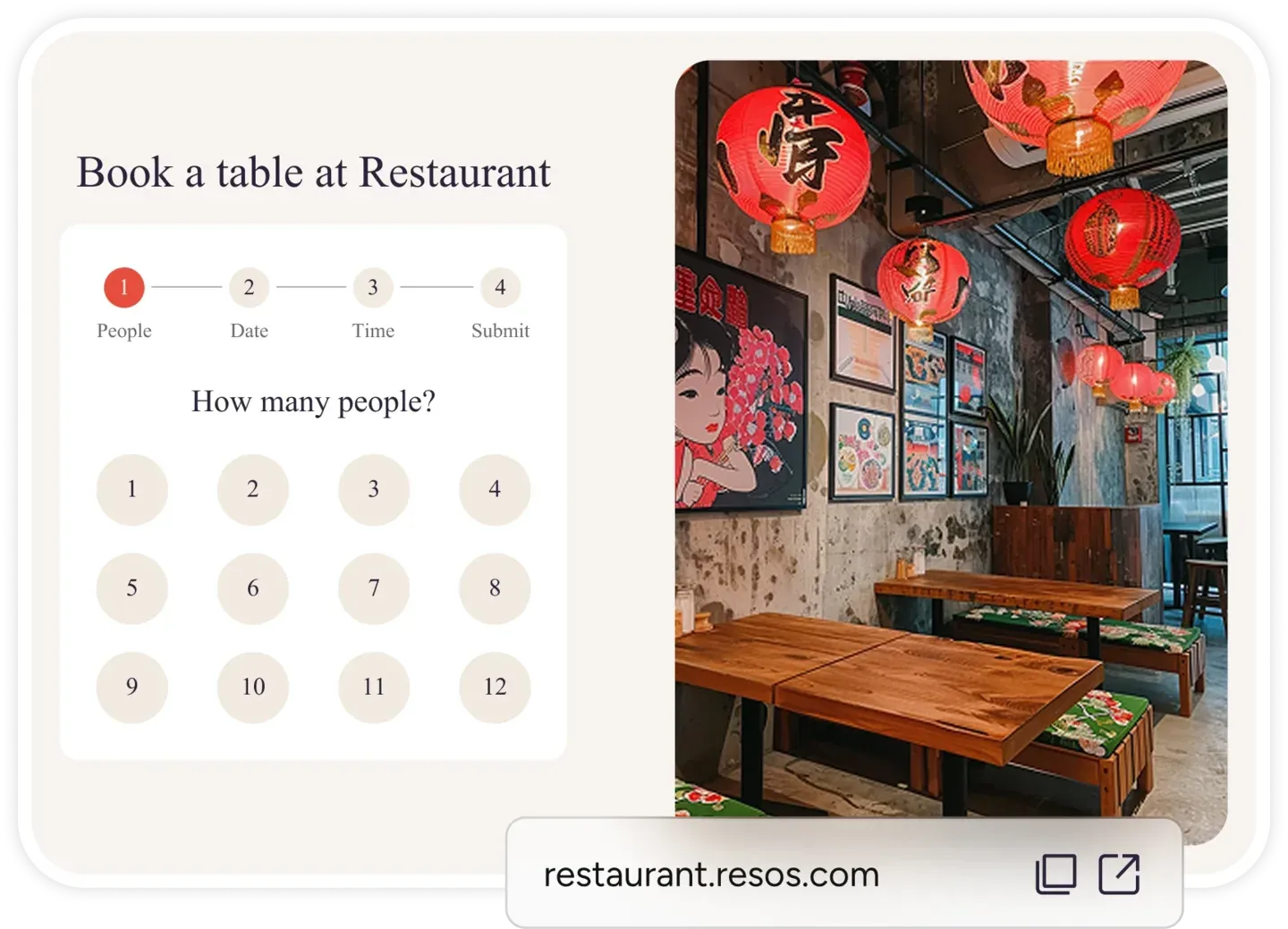
- Show the same deadline and terms on the booking page and in the confirmation.
- Name the local time and the amount and currency, where relevant.
- Give guests a working cancellation route and staff a monitored contact channel.
- Test a headcount change, a timely cancellation and a late cancellation.
- Check payment status before telling a guest that a charge or refund is complete.
Where reminders and confirmation fit in
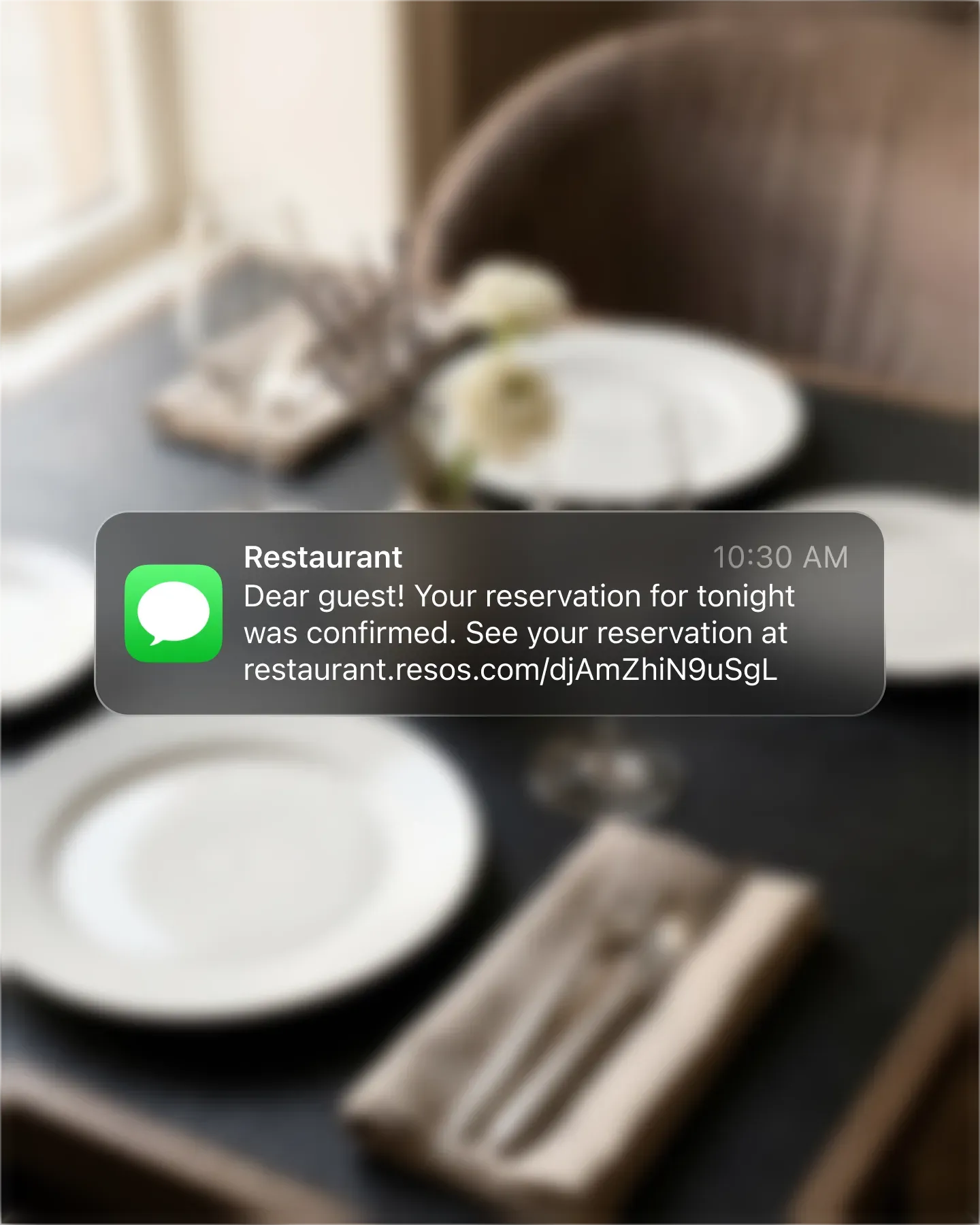
Use the booking confirmation and reminder templates to carry the policy into guest messages. Keep any payment terms consistent with what the guest accepted.
A policy only works if guests see it before they book, and if you give them an easy way to act on it before the window closes. A clear booking confirmation step does the second part: it surfaces the policy at the moment of booking and gives the system a chance to re-confirm or release a reservation while the slot is still sellable, instead of finding out at the door.
Reminders do the first part. They don’t just nudge a guest who forgot, they give a guest who already knows they can’t make it a clean, easy way to cancel before the window narrows to nothing. In the Resos No-Show Index, reservations with a delivered SMS reminder showed a 16% lower recorded no-show rate than reservations at the same restaurants without one, based on 46,884 exposed reservations at 257 restaurants that had bookings both with and without a delivered reminder. That is an observed association from operational data, not a controlled experiment, so treat it as a signal that reminders correlate with fewer no-shows rather than a guaranteed result for your restaurant.
Where to make the policy stricter
Different services may need different notice windows. Start with your own history and the time needed to offer a table to another guest. The index points to where the risk actually concentrates: dinner runs a 2.63% no-show rate against 1.84% at lunch, 43% higher. Monday is the worst day at 2.69%, Wednesday the best at 2.09%. January is the worst month at 2.62%, August the best at 2.14%. These are separate descriptive cuts, not proof that combining those characteristics predicts one restaurant’s risk or that stricter terms will help. Use your own records when choosing a no-show management strategy.
What deposits and fees can and can’t promise you
A no-show fee or a required deposit is a reasonable way to protect an exposed service, especially the large-party and peak-dinner bookings above. What it is not is a proven way to lower your no-show rate. We publish no figure for that, and we would not stand behind one. Use it to recover the cost of a table that goes unsold and to signal that a reservation is a real commitment, not as a claim that it will change guest behaviour on its own.
Put the policy where guests will actually read it
Put the policy on the booking page before the guest accepts it, then repeat the relevant deadline in their confirmation. In Resos, your team chooses which waitlisted party gets an opening and converts the entry into a booking; the confirmation is then sent automatically. A written policy alone does not configure payment collection or guarantee a replacement booking.