


In this article
Most restaurants treat the big table like a liability. A party of twelve gets a deposit, a phone confirmation, sometimes an outright policy that caps group size on busy nights. The instinct makes sense: when a large party fails to show, it hurts more than a two-top skipping out. But the fear and the data point in different directions. According to the Resos No-Show Index, which tracked 3,768,761 advance reservations at 2,417 restaurants from August 2025 to July 2026, parties of 10 or more no-show at 1.15%, less than half the rate of tables for one or two at 2.63%. Large groups are not the risky booking. They are the rare one that costs the most when it fails.
That distinction matters, because it changes what you should actually do about big bookings. The answer is not to refuse them or wrap them in friction. It is to take them, and put your protection where the real exposure is: not in the odds of a no-show, but in the size of the loss.
Key takeaways
- Large parties no-show far less often than small ones. Tables of 10 or more sit at 1.15%, tables of one or two sit at 2.63%, more than double.
- The risk in a big booking is not the probability, it’s the payout. Expected lost covers per booking climb steadily with party size, from 0.051 for a table of two to 0.154 for a party of 10 or more.
- A 10+ party carries roughly three times the expected lost covers of a table for two, and because that bracket is open ended, the real exposure for your biggest bookings is likely higher still.
- The overall recorded no-show rate is 2.33%. Dinner runs hotter than lunch (2.63% vs 1.84%), and 56% of all cancellations land inside 24 hours of the booking or after it already started, which is exactly when a large-party gap is hardest to fill.
- The fix is not refusing big tables or leaning on deposits as a cure. It’s confirming them properly and protecting the service around them.
The number that should change how you think about big tables
If you run a restaurant, you’ve felt the dread of a large party not showing. Twelve empty seats on a Saturday night is a visible, immediate loss, and that visibility makes it feel like the most dangerous booking on the book. The index says the opposite is true of the odds. Here is the full breakdown by party size.
| Party size | No-show rate | Avg. covers per no-show | Expected lost covers per booking | Reservations |
|---|---|---|---|---|
| 1 to 2 guests | 2.63% | 1.96 | 0.051 | 1,860,642 |
| 3 to 4 guests | 2.13% | 3.54 | 0.076 | 1,150,708 |
| 5 to 6 guests | 2.28% | 5.50 | 0.125 | 414,338 |
| 7 to 9 guests | 1.73% | 7.75 | 0.134 | 187,425 |
| 10+ guests | 1.15% | 13.44 | 0.154 | 155,583 |
Two things move in opposite directions as party size grows. The no-show rate itself trends down, from 2.63% at the smallest tables to 1.15% at the largest. People who organise a group booking have usually put more into it: a group chat, a shared calendar invite, a reason to be there. A solo diner or a couple can change their mind on a whim in a way a party of ten rarely does.
But the “expected lost covers per booking” column, which is the no-show rate multiplied by the average covers lost when a no-show happens, climbs the entire way up the table. That is the number that actually matters for your floor plan, because it is what you should expect to lose, on average, every time you take a booking of that size. A table for two costs you 0.051 covers of expected loss. A party of 10 or more costs you 0.154, roughly three times as much.
Why the top bracket understates the real exposure
The 10+ row in the table above is open ended. It covers every party from ten guests up, including the 16-tops and 20-tops that show up for a birthday or a work event. The bookings in that bracket that actually failed averaged 13.44 covers, well above ten, which means if you mentally read that last column as “a table of exactly ten,” you are underselling the exposure by about a quarter.
In practice, this means your very largest bookings, the ones you might be tempted to wave through because “big parties rarely bail,” carry the highest expected loss of any segment you take. The rate is low. The payout, when it goes wrong, is not.
What this means for dinner service and last-minute risk
Two more figures from the index sharpen the picture. Dinner runs a 2.63% no-show rate against 1.84% at lunch, so your evening seatings, where large celebratory bookings tend to land, are already the higher-risk service before you even factor in party size. January is the worst month in the data at 2.62%, which lines up with the post-holiday lull when plans made in December quietly fall apart.
The timing of cancellations matters just as much as the rate. 56% of all cancellations arrive within 24 hours of the booking or after it has already started. For a table of two, a same-day cancellation is annoying. For a party of twelve, a same-day cancellation on a Saturday dinner service is a hole in your night that walk-ins are unlikely to fill before last orders. That is the real argument for treating large bookings differently: not because they are more likely to fail, but because a late failure is expensive and hard to recover from at short notice.
Take the booking, then protect the service around it
None of this is an argument for capping group size or making large parties jump through hoops before you’ll seat them. Refusing your lowest no-show segment because it scares you is a bad trade against the data. The better move is to take the booking and spend your effort where the loss actually lives.
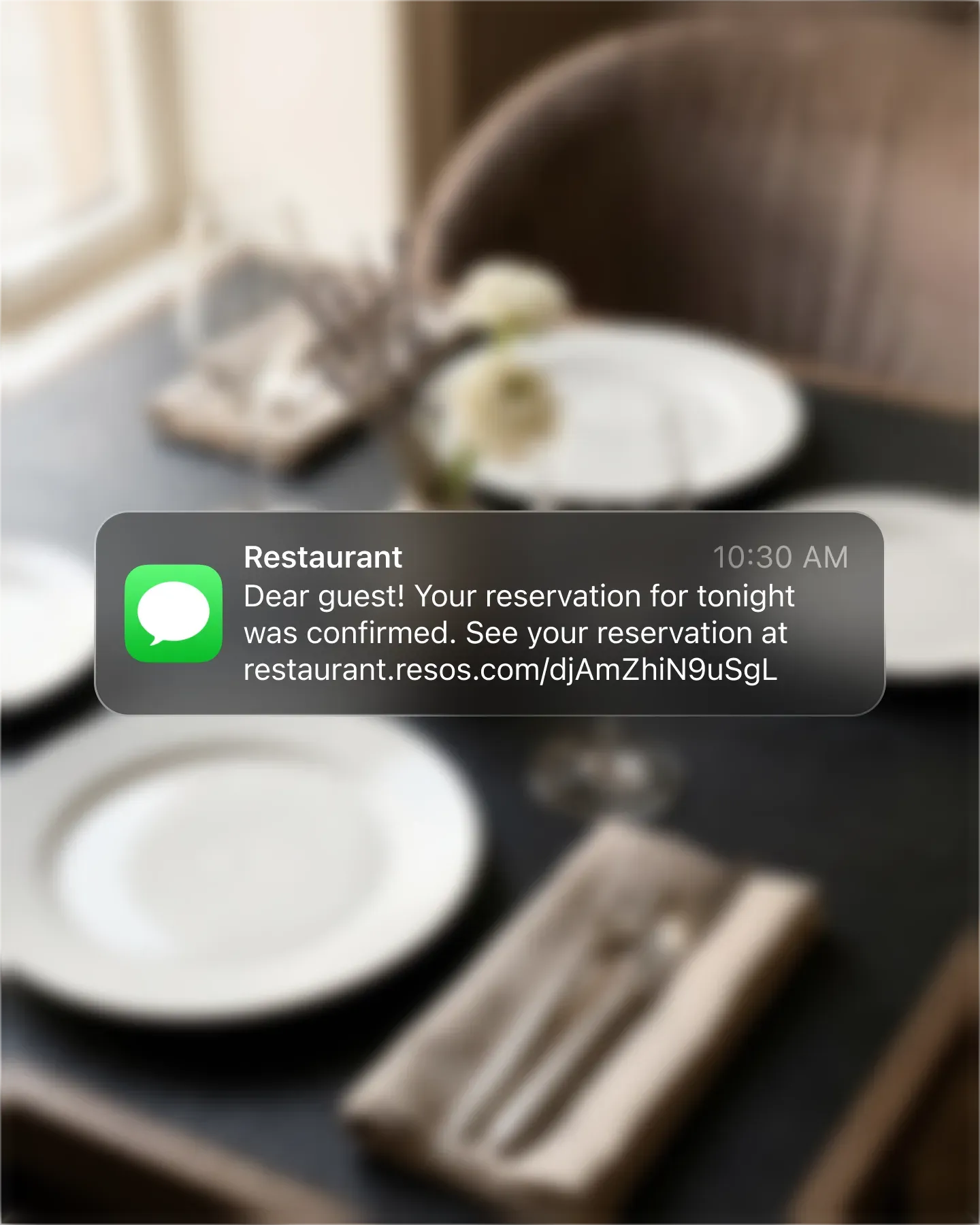
Confirm properly, especially close to the date. A clear booking confirmation that the guest actually sees, plus a reminder as the date approaches, gives an organiser the chance to flag a change before it becomes a same-day surprise. Given that more than half of cancellations happen inside 24 hours or later, catching even some of them early is worth more for a 12-top than for a table of two.
Use deposits and payments to protect your most exposed seatings, not as a guaranteed fix. We do not publish a figure for how much a deposit changes the odds of a party showing up, because we do not have one we would stand behind. What a deposit or an online payment does do is put something at stake for the organiser and give you a way to recover part of the cost if the booking still falls through. That is worth having on your highest-exposure services regardless of what it does to the underlying behaviour.
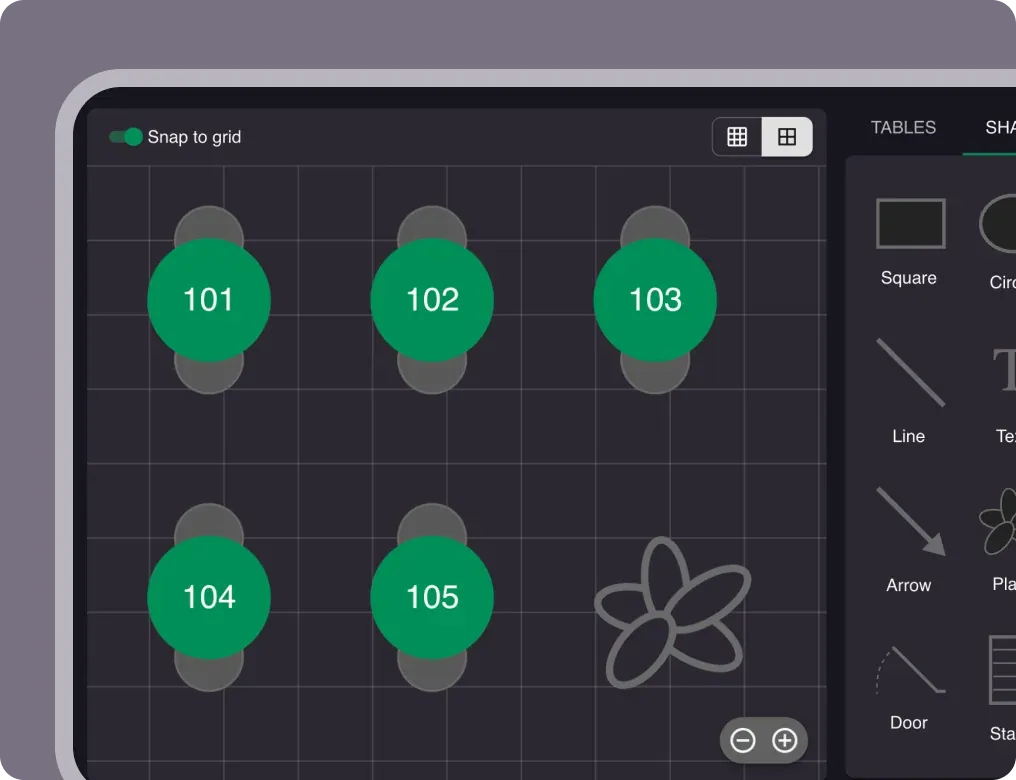
Plan your floor for the size of the gap, not just the odds of one. Good table management means you can hold a large block without freezing revenue around it: track how firm the booking is, know which combinations can absorb a partial no-show, and see at a glance which large parties are approaching their service window without a confirmed headcount.
Read the no-show rate as a planning input, not a warning to say no. The Resos No-Show Index and our broader guide on how to reduce no-shows both point the same way: the goal is fewer surprises close to service, not fewer bookings on the books.
The rational policy
If you’re setting a group booking policy, let the data set it rather than the memory of your worst Saturday. Large parties are your safest bet by probability and your costliest miss by size. That calls for treating them as valuable bookings worth confirming carefully, not as risks worth turning away. Restrict nothing, protect everything that’s actually large, and put your energy into the 24-hour window where more than half of all cancellations happen.
Resos gives you the confirmation flow, prepayment and no-show fee tools, and table management to do exactly that, without guesswork about which bookings need the attention. If you’re ready to put a real policy behind your large-party bookings instead of a gut feeling, see how Resos handles table management, booking deposits, and confirmations for restaurants of every size.