


In this article
Choosing the right restaurant booking system is crucial for managing reservations, reducing no-shows, and improving guest experience. Here, we compare Resos, OpenTable, and ResDiary, three of the most popular options, to help you decide which best suits your restaurant.
Quick answer: For most independent restaurants, Resos is the best fit because it charges no commission and no per-cover fees, so a fully booked night never costs you more. Choose OpenTable if you need its diner network and can absorb roughly $1 to $1.50 per booked guest on top of a monthly fee. ResDiary sits in between: no per-cover fees and strong table management, but a higher subscription than Resos.
What does each booking system do best?
Resos - The Best Choice for Restaurants

Resos is an affordable, cloud-based reservation system that offers flexibility and ease of use for restaurants of all sizes. With no per-cover fees, restaurants can keep their costs low while enjoying powerful features like online bookings, waitlist management, and custom branding.
Resos integrates with Reserve with Google, your website, and a wide range of tools through Zapier, making it the best choice for independent restaurants, small chains, and budget-conscious operators looking for a cost-effective solution.
It’s especially perfect for growing restaurants that want an intuitive and scalable system without breaking the bank.
Resos

| Pros: | Cons: |
|---|---|
| ✅ No commission and no per-cover fees | Smaller diner network compared to OpenTable |
| ✅ Custom branding and flexible integrations | Fewer advanced marketing tools |
| ✅ Simple setup and ease of use |
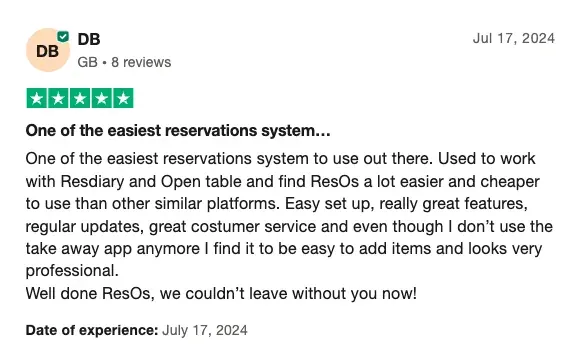
Many restaurant owners praise Resos for being extremely easy to use, affordable, and offering excellent customer service. The platform simplifies the reservation process, making it a top choice for independent restaurants and small chains looking for a reliable booking system.
OpenTable – Best for High-Traffic Restaurants
As one of the biggest reservation platforms worldwide, OpenTable offers high visibility to potential diners. Restaurants that rely on high customer volume can benefit from its extensive marketing tools and loyalty programmes.
However, it charges a per-cover fee, which can significantly impact profits, especially for busy establishments. OpenTable works best for high-traffic restaurants in prime locations that prioritise exposure and customer acquisition over cost savings.
| Pros: | Cons: |
|---|---|
| ✅ Extensive customer base | High commission fees per booking |
| ✅ Advanced marketing and loyalty programs | Less flexibility for brand customization |
| ✅ Strong integration capabilities |
OpenTable UK has received a mix of feedback from users on Trustpilot. Many diners appreciate its wide network and the ease of booking reservations, making it a convenient choice for both restaurants and customers.
However, some reviews mention issues with customer service and occasional booking reliability problems. While it remains a popular platform, restaurant owners should evaluate the benefits of its visibility against potential challenges with support and fees.
ResDiary – A Strong Reservation Management

ResDiary is a widely used restaurant reservation system that offers robust table management features and marketing tools. Unlike OpenTable, it does not charge per-cover fees, making it a cost-effective solution for restaurants that prefer a subscription-based model. ResDiary is known for its in-depth customization options and integration capabilities, making it ideal for restaurants that want greater control over their booking process.
| Pros: | Cons: |
|---|---|
| ✅ No per-cover fees | Smaller diner network than OpenTable |
| ✅ Advanced table management and booking features | Higher cost compared to Resos |
| ✅ Strong marketing tools and broad integrations via Zapier |
Many users appreciate its comprehensive features and customization options, which help restaurants manage bookings effectively.
How do the features compare?
| Feature | Resos | OpenTable | ResDiary |
| Custom Branding | ✔️ Yes | ❌ No | ✔️ Yes |
| Marketing Tools | ✔️ Yes | ✔️ Yes | ✔️ Yes |
| Commission Fees | None | Per cover | None |
| Waitlist Management | ✔️ Yes | ✔️ Yes | ✔️ Yes |
| Integrations | Facebook, Google, Instagram, Zapier | POS, Google, Websites | POS, Google, Websites |
| Diner Network | Limited | Extensive | Moderate |
Note: Resos offers all features without per-cover fees, making it a cost-effective choice.
How much does each one cost?
The biggest cost difference is the fee model. Resos and ResDiary charge a flat subscription, while OpenTable adds a per-cover commission on top of its monthly fee, so your bill grows with every booked guest.
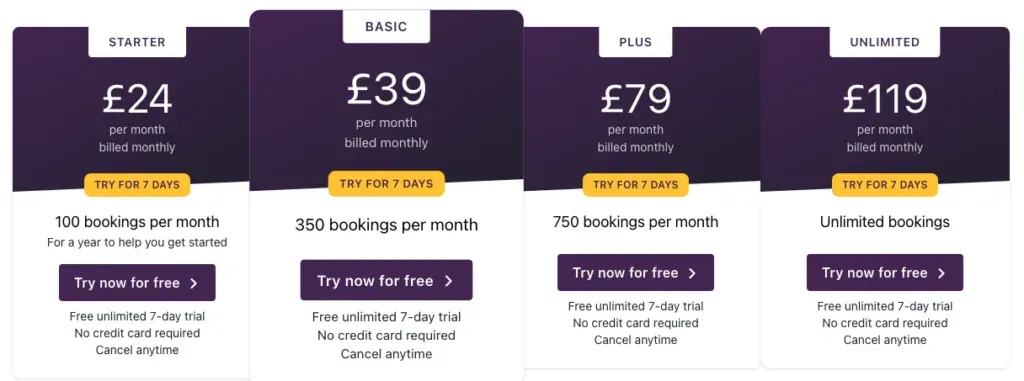
Resos: A free plan at €0/month, with paid plans starting around €45/month. No commission and no per-cover fees on any plan, so a fully booked Saturday costs the same as a quiet Tuesday.
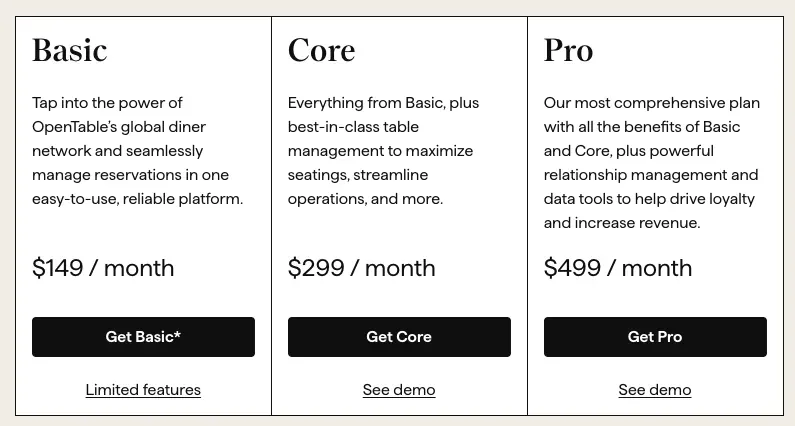
OpenTable: A monthly subscription (around $149/month) plus a $1 to $1.50 per-cover commission on every booked guest. Predictable for quieter venues, but the per-cover fees add up fast for high-traffic restaurants.
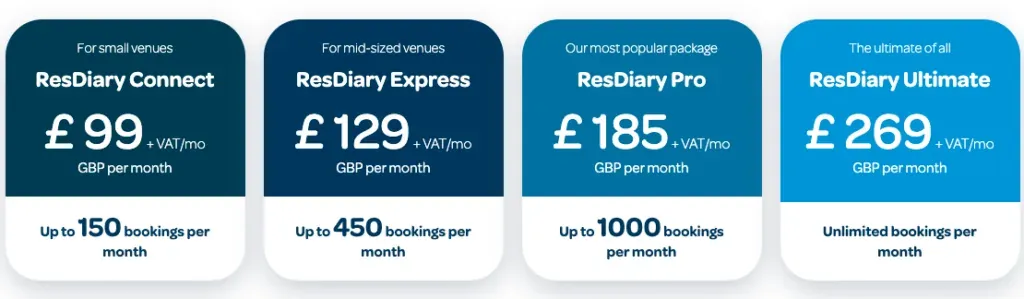
ResDiary: Subscription-based with no per-cover fees, priced higher than Resos. A solid middle ground if you want advanced table management without paying commission.
Which booking system should you choose?
- For budget-conscious restaurants: Resos is the best choice, offering a cost-effective solution without per-cover fees.
- For high-volume restaurants: OpenTable provides unmatched visibility and marketing capabilities.
- For established restaurants: ResDiary provides advanced table management without per-cover fees, making it ideal for venues with complex operations.
The bottom line: which is right for you?
Pick Resos if keeping costs flat matters more than a built-in diner network: no commission, no per-cover fees, and a free plan to start. Pick OpenTable if you rely on its marketplace to fill tables and can absorb the per-cover fees on every booking. Pick ResDiary if you need heavy-duty table management and don’t mind a higher subscription than Resos.
A restaurant booking system allows customers to make reservations online, which are then managed by the restaurant through a centralized platform. This helps in organizing bookings, reducing no-shows, and improving overall efficiency.
Using a reservation system helps manage bookings efficiently, reduces the likelihood of double bookings, provides valuable guest data, and can enhance the overall guest experience.
While some systems offer free basic versions, they may come with limitations. It’s essential to assess your restaurant’s specific needs and consider investing in a system that offers the necessary features for smooth operations.
Many booking systems send automated reminders to customers and allow for easy cancellations or modifications, significantly reducing the number of no-shows.
Yes, many modern booking systems offer integrations with popular POS systems, allowing for seamless operations and better data management.