


In this article
Airlines overbook flights because they have decades of precise, seat-level no-show data and a system that can bump a guest to the next flight with a voucher. Restaurants have neither. If you overbook a 7pm table and everyone shows up, you cannot bump a family to the next seating with an apology and a travel credit. You just have angry guests standing in your entryway. So should a restaurant overbook at all? For most restaurants, the honest answer is no, not across the board. The better move is to know which services actually carry no-show risk and plan staffing, prep, and policy around those, instead of guessing at a blanket buffer.
Key takeaways
- The average recorded no-show rate is 2.33%, based on 87,953 no-shows across 3,768,761 advance reservations at 2,417 restaurants (August 2025 to July 2026), tracked in the Resos No-Show Index. That is too low and too uneven to justify overbooking every service.
- Risk is not evenly spread. Monday (2.69%), dinner (2.63%), and January (2.62%) run measurably above the average, while Wednesday (2.09%), lunch (1.84%), and August (2.14%) run below it.
- Busier restaurants see more risk, not less. Venues doing 500 to 999 bookings a month run at 3.17%, well above the overall average.
- The recorded rate almost certainly understates the true rate, since only 72.9% of eligible venues logged even one no-show in the dataset. Measure your own numbers before you touch policy.
- Overbooking on a hunch trades one problem (an empty table) for a worse one (a broken promise to a guest who showed up). Use the data to staff, prep, and target policy instead of to add seats you cannot honor.
Why airlines can overbook and restaurants usually can’t
Airlines overbook because the math is precise and the fallback is graceful. A given route, on a given day of week, at a given time, has a no-show rate an airline knows to a fraction of a percent from years of ticketing data. When the math is wrong and everyone shows up, the airline can rebook the extra passenger on the next flight, hand over compensation, and move on. The guest is inconvenienced, not stranded.
A restaurant’s fallback is much rougher. There is no “next flight” for a table. If you sell a seat twice and both parties show up, someone waits at the bar, gets a worse table, or gets turned away after driving across town for a reservation you confirmed. That is the exact experience booking systems exist to prevent. Overbooking without airline-grade precision just moves the risk from your revenue line to your guest relationships, and guest relationships are harder to win back than a seat.
Why “just overbook by a few covers” doesn’t hold up
The idea sounds reasonable: if a small, known share of guests does not show, take a few extra reservations to cover the gap. The problem is that 2.33% is an average smoothed across every restaurant, every day, and every service in the dataset. Your Tuesday lunch and your Saturday dinner are not the same risk pool, and treating them as one number is how a “safe” overbooking buffer turns into a walk-in guest with no table.
There is also the measurement problem. Marking a no-show takes a staff member noticing an empty confirmed table and logging it, and in the underlying data only 72.9% of eligible venues logged a single no-show over the full year. Restaurants that do not track no-shows at all are, by definition, not in that recorded rate, which means the true rate across the industry is probably somewhat higher than 2.33%, not lower. That is not a reason to overbook more aggressively. It is a reason to find out what your own rate actually is with your own reporting before you touch your booking policy at all.
Where the real risk actually sits
The index breaks the risk down in ways that are far more useful than a single average, because they tell you where to focus instead of whether to gamble.
Day of week. Monday is the worst day at 2.69%, and Wednesday is the best at 2.09%. If you are going to apply any kind of buffer, prep more conservatively, or watch a service more closely, Monday is where that attention belongs, not Wednesday.
Service period. Dinner runs at 2.63% against lunch at 1.84%, a 43% gap. Dinner reservations (from 17:00) carry meaningfully more risk than lunch (from 05:00), which lines up with how people behave: dinner plans get displaced by a longer day, a change of mood, or a better invite that comes in during the afternoon.
Time of year. January is the worst month at 2.62%, and August is the best at 2.14%. New Year’s resolutions, weather, and post-holiday budget resets all plausibly play a role, but whatever the cause, January deserves tighter attention on your books than August does.
Venue size. Restaurants taking 500 to 999 bookings a month run at 3.17%, well above the 2.33% average. Higher volume does not buy you a lower risk profile. If anything, it means more services where the Monday-dinner-January pattern can compound.
Party size. Large parties are the outlier worth knowing. Parties of 10 or more no-show at just 1.15%, far below the 2.63% rate for tables of one or two. But when a party of 10 or more does no-show, it averages 13.4 empty covers at once. Low frequency, high severity: exactly the profile you protect with a policy, not a hunch.
Cancellations. Of the 566,049 cancellations in the dataset, 56% arrive within 24 hours of the booking or after the reservation was supposed to start, and 7.1% land after the start time itself. Late cancellations behave a lot like no-shows in terms of what they do to your floor plan, and they deserve the same attention as the no-show numbers above.
What to actually do instead of overbooking
Staff to the risk, not the average. If Monday dinners in January consistently run hotter on no-shows than the rest of your calendar, that is where a manager should be walking the floor with the reservation list in hand, not on a slow Wednesday lunch.
Prep to the risk, not the average. Kitchens lose money on over-prepped Monday dinners and under-prepped Saturday brunches alike. Use the day-of-week and service-period pattern to adjust prep quantities for the services that are actually volatile, and use a digital waitlist to backfill any gap that opens up on the floor in real time instead of guessing at it three days in advance.
Target policy, don’t blanket it. For the small number of high-severity bookings, like parties of 10+, a deposit or a credit-card hold protects the service that actually has something to lose. We will not tell you deposits reduce no-shows, because we do not have a number for that we would stand behind. What they do reliably is put something at stake on the booking that would hurt most if it fell through, and give you a way to apply that selectively rather than restaurant-wide.
Confirm the reservation instead of doubling it. A timed reminder that reaches a guest before the reservation, through automated booking reminders, gives a guest who cannot make it the chance to cancel early instead of no-showing. That converts a same-night surprise into an early cancellation, which your waitlist or a walk-in can actually fill. That protects the seat without ever having promised it to two parties.
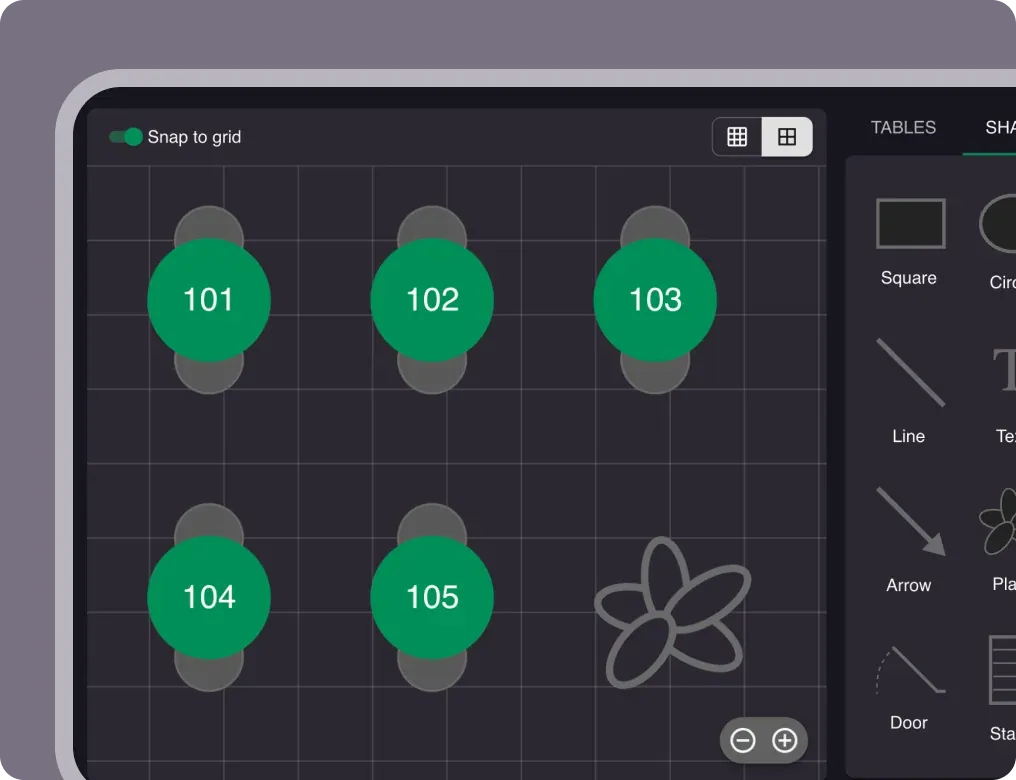
Manage the floor, not just the bookings. No-shows and late cancellations both create the same operational problem: a hole in a floor plan that was fully seated on paper. Solid table management makes it far easier to spot and fill that hole in the ten minutes after a no-show becomes obvious, which does more for your bottom line than trying to predict the hole two weeks out. For a broader playbook on the topic, see our guide on how to reduce no-shows in the restaurant industry.
The bottom line
Overbooking works for airlines because they have precise data and a graceful fallback. Most restaurants have neither, and a 2.33% recorded average that is likely understated is not precise enough to overbook on safely, especially once you see how much that rate swings by day, service, month, and size. The more useful move is to use the pattern, Monday worse than Wednesday, dinner worse than lunch, January worse than August, large parties rare but costly when they miss, to decide where you staff tighter, prep lighter, and apply a policy like a deposit or a hold. That protects your riskiest services without ever risking the promise you made to a guest who showed up on time.
Resos gives you the reporting to find your own no-show pattern, the reminders to cut down on last-minute surprises, and the table management to recover fast when a seat does open up unexpectedly. See how Resos handles no-shows and start with a plan that fits how your restaurant actually books, not a blanket buffer that guesses at it.